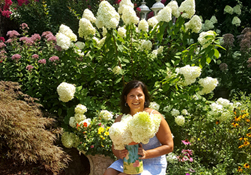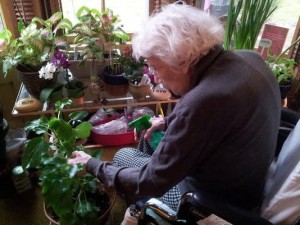
Flowers and plants used for Horticultural Therapy activities for children through seniors at all stages of life, abilities and social, vocational and rehabilitative and therapeutic settings. During the winter months a wide range of Horticultural Therapy activities are facilitated indoors, with or without a greenhouse. Activity examples include, but are not limited to, forcing small, medium and large bulbs, such as Amaryllis and Paper Whites, care and maintenance of houseplants, plant propagation, creating succulent gardens and terrariums, flower arranging and seed starting. Plants possess interactive qualities that involve people. Plants stimulate our sight/vision, scent, hearing, touch and taste. (Photo: ~Courtesy of Laura DePrado)
Consumer horticulture is the cultivation, use, and enjoyment of plants, gardens, landscapes and related horticultural items to the benefit of individuals, communities, and the environment. These activities rely on the understanding and application of the art and science of horticulture.
The percentage of U.S. households participating in consumer horticulture will increase from 70 percent in 2014 to 90 percent by 2025, according to the U..SD.A. National Initiative for Consumer Horticulture. (more…)